
iPhone app development / Tampa, Florida
A native iPhone app, built properly.
Fintlock designs and builds iPhone apps in Swift and SwiftUI, then carries them through TestFlight and App Store review. The whole app, not a website in a wrapper.
The problem
Why native, and why it matters
Most business owners come to us with the same worry: they have seen apps that feel slow, look borrowed, and get rejected by Apple, and they do not want to pay for one of those. The cause is usually the same. The app was built as a web page inside a shell, or by a team that had never shipped through App Store review.
A native app uses the phone the way Apple intended. It opens instantly, works offline where it should, uses the camera, notifications, and Face ID directly, and looks at home next to the apps your customers already trust. It is also what Apple's reviewers expect to see.
What we build
What an iPhone project includes
Every engagement covers the full path from idea to a listing on the App Store. Depending on the product, that means:
- Product planning: working out the few screens that matter and cutting the rest
- Interface design in Apple's own conventions, so the app feels familiar on day one
- Native development in Swift and SwiftUI, with SwiftData or a backend where the product needs one
- Subscriptions and one-time purchases through StoreKit, if the app is a product
- Camera, location, notifications, and sign-in with Apple where they earn their place
- TestFlight builds for your own testers before anything is public
- The App Store listing, screenshots, privacy labels, and review submission
- Updates for each autumn's iOS release, so the app keeps working
Project example / Fintley
Any address, appraised in seconds.
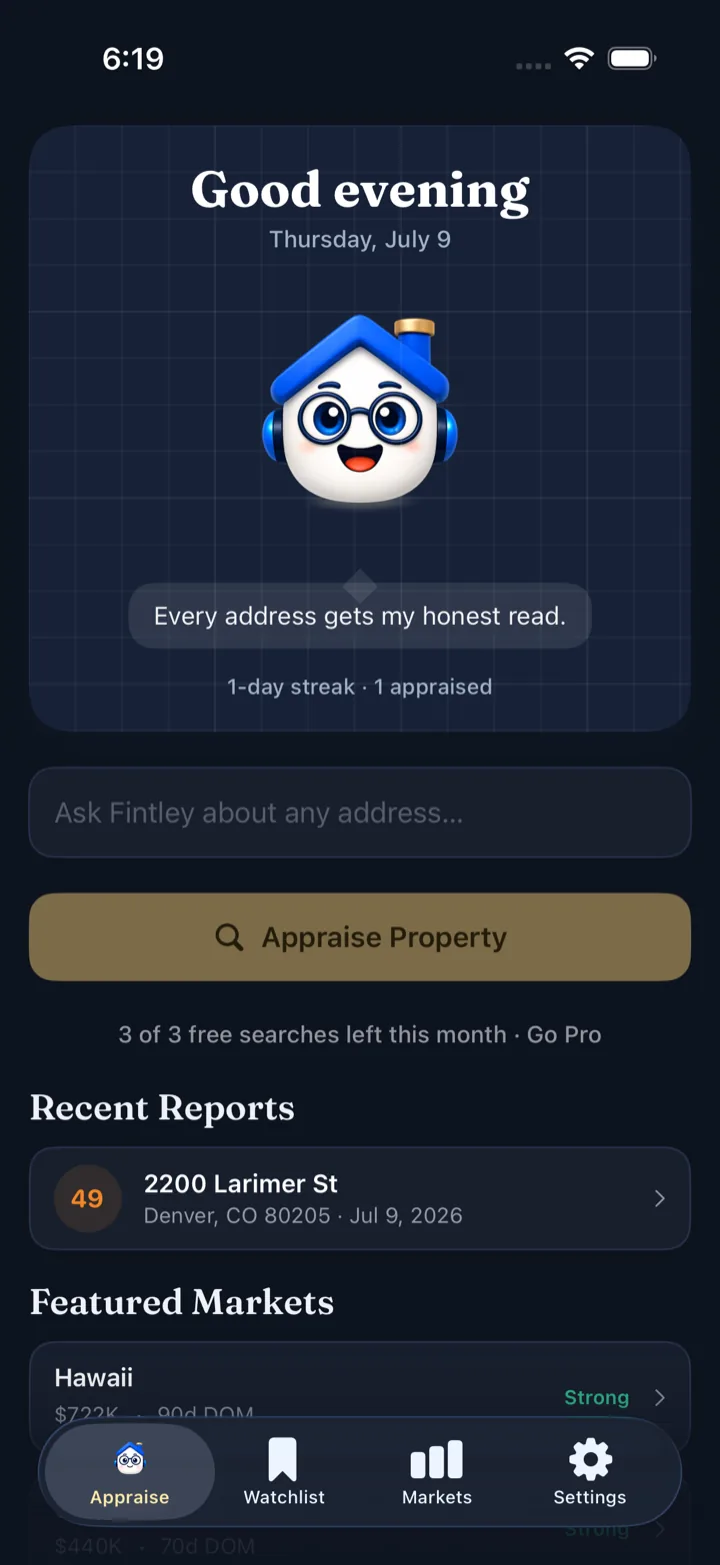
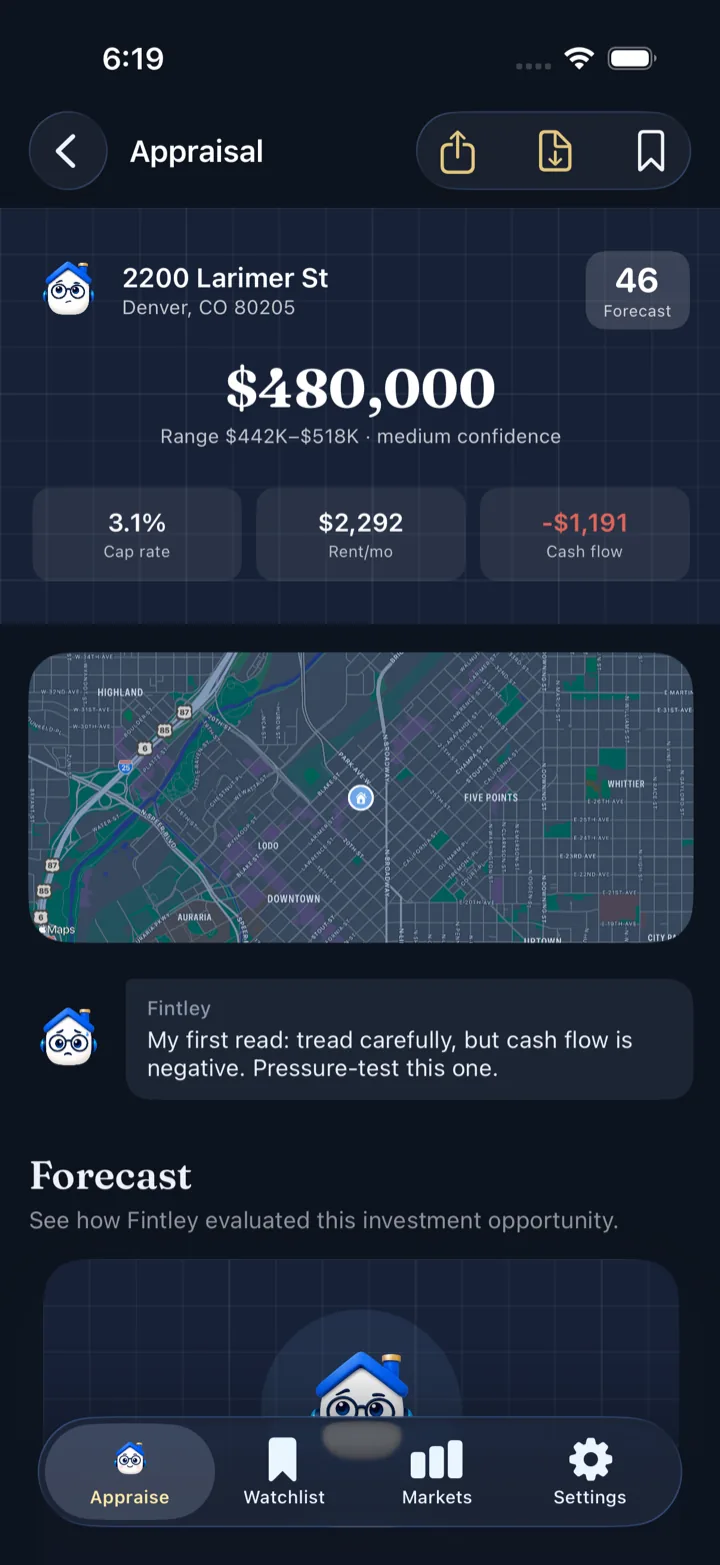
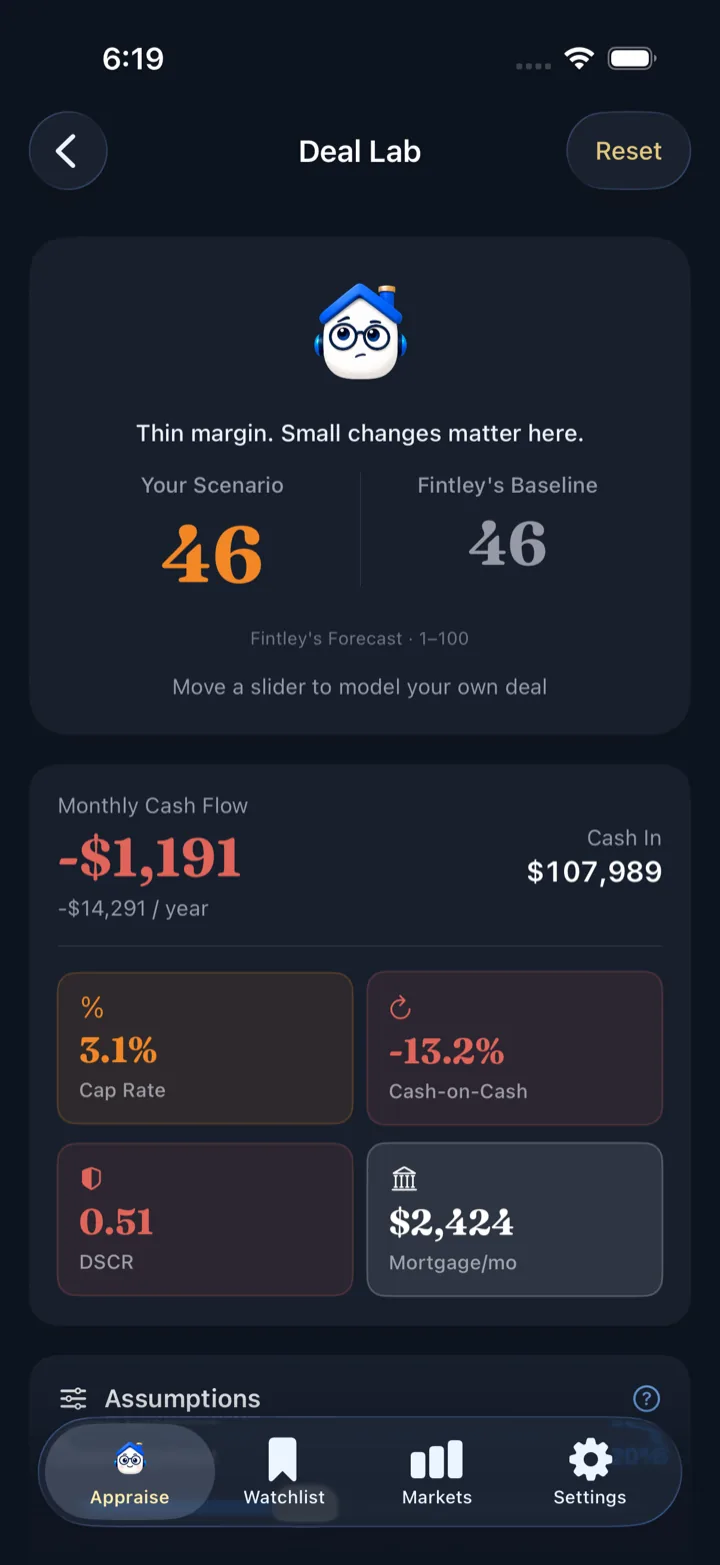
Fintley is our own real estate app for iPhone. Type an address and it returns an estimated value and range, projected rent, cap rate, monthly cash flow, and a Forecast score from 1 to 100, with a plain-language read on the deal. A Deal Lab lets you change the assumptions and watch the numbers move.
It is built entirely in SwiftUI and is the clearest public example of how we handle data-heavy screens, charts, and a subscription on iPhone.
- Platform
- iPhone
- Built with
- SwiftUI
- Website
- fintley.app
How a project runs
Three stages, each with something to show for it.
A written scope and a price before work starts, working builds while we build, and a proper handover when it ships. More on how we work.
Scope
We start with a conversation about what happens today and what needs to change. From that you get a written scope and a price before any code is written.
Build
Design and development run in short cycles. You review working software as it comes together, on your own phone or desk, rather than a slide deck about it.
Launch
App Store submission, deployment, documentation, and a proper handover. When it ships, your team can run it, and we are still reachable when something needs attention.
Questions
Things people ask about iPhone apps.
How long does an iPhone app take to build?
A focused first version usually takes a few months from kickoff to App Store submission. Complex products take longer. We tell you where yours lands after the first conversation, and the written scope fixes it.
What does an iPhone app cost?
It depends on what the app has to do, which is why we write the scope down first. You get a price before any code is written, and it does not move unless the scope does.
Do you build for Android too?
Our native work is iPhone. If you need both platforms, we will say so up front and talk through the options, including a browser app that works on any phone.
Who owns the app?
You do. The source code, the App Store listing, and the developer account are set up in your name.
Related services
Contact
Tell us what needs to work better.
A few sentences about the problem, who deals with it, and what you would like to change is enough to start. We reply within one business day.